


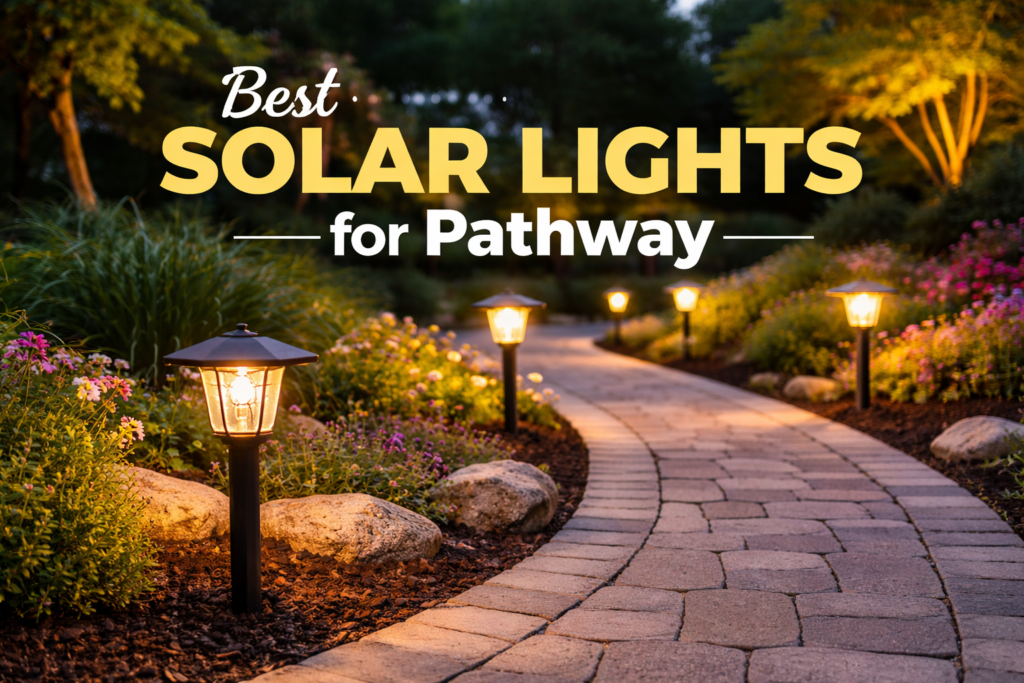
A good set of solar pathway lights does two jobs at once: it makes your outdoor space safer to walk at night and it makes your home look more inviting. The tricky part is that many “bright” solar lights are not actually bright, and many “waterproof” options do not survive a full season outdoors.
This guide is built around real-world selection criteria used in outdoor lighting and product evaluation: brightness (lumens), ingress protection (IP rating), battery runtime, charging efficiency, materials, and long-term reliability. I’ll also recommend several widely used, commonly reviewed models that are readily available from major online retailers, and I’ll explain exactly who each one is best for.
Industry Standards and What Actually Matters in Solar Path Lights
Solar pathway lights are simple in concept, but the performance differences come down to a few measurable factors.
Ingress Protection (IP Rating)
For outdoor lighting, the IP code is the easiest way to judge water and dust resistance. It’s defined under IEC/EN 60529.
- IP65 is a common “good enough for outdoors” rating: dust-tight and resistant to water jets. (Source: FARO)
- IP67 and higher generally implies better protection against deeper water exposure, though specs vary by product category and test conditions.
For pathway lights, IP65 is a solid baseline. If your lights sit in low spots where puddles form, you may want higher protection where available.
Brightness (Lumens) for Walkway Safety
Brightness is measured in lumens. There isn’t one universal number because “enough light” depends on spacing, surface, and ambient lighting. Still, multiple lighting guides converge on a practical range:
- 100 to 200 lumens is commonly recommended for pathways where you want clearer visibility.
- Around 80 lumens can be sufficient for many walkways, especially when lights are spaced well and the goal is guidance rather than security-level brightness.
Important: many pathway sets are lower-lumen by design because they prioritize ambience and long runtime. That can be perfect for curb appeal. It is less perfect for uneven steps or darker side yards.
Runtime and Charging Reality
Most quality solar path lights advertise roughly 8–10 hours after a full charge, which aligns with what many testing roundups observe across outdoor solar categories.
In practice, runtime depends on:
- Daily sun exposure (direct sun beats partial shade)
- Solar panel size and efficiency
- Battery capacity and health
- Cold weather performance
Color Temperature
Warm white tends to look “premium” and welcoming. Cool white can look brighter, but sometimes feels harsh or clinical. Many outdoor testing guides recommend matching color tone to your use case and exterior style.
How We Chose These Picks
To keep this useful and credible, these recommendations are based on:
- Commonly recommended models across reputable review roundups and product-test articles
- Verified product specifications such as battery type, typical charge time, and stated runtime (where available)
- Recurring themes in large volumes of customer feedback: brightness consistency, water resistance, and early failures
- Practical pathway use cases: curb appeal, safety guidance, steps, and mixed weather conditions
I’m not going to pretend every unit here was personally tested in a lab by me. What I can do is apply a consistent evaluation framework and cross-check what real users and established reviewers repeatedly report.
Quick Buying Advice (So You Don’t Overthink This)
If you want the fastest route to a good decision:
- Want classic pathway glow + reliable runtime: choose a well-known metal/stainless pathway set.
- Want strong weather resistance + durable build: prioritize IP rating and materials.
- Want steps and edges lit cleanly: consider solar step lights, not just stake lights.
- Want a “high-end” look: warm white, consistent diffusion, and sturdier housings.
Best Solar Lights for Pathway (Top Picks)
GIGALUMI Solar Pathway Lights (6-Pack)
This is one of the most commonly recommended pathway sets because it focuses on the basics that matter: automatic dusk-to-dawn operation, simple stake installation, and a dependable “guide light” output rather than a harsh spotlight effect.
What stands out in the specs is the typical charging and runtime expectation (often stated around 8–10 hours after a full charge) which is a realistic target for better solar pathway options.
Best for
- Front walkways, garden borders, driveway edges
- People who want a clean look with minimal fuss
What to watch
- Like many pathway sets, this category usually prioritizes ambience. If your path is uneven or truly dark, you may want higher-output lighting or closer spacing.
BEAU JARDIN Stainless/Glass Solar Pathway Lights (Multi-Pack Options)
If you care about aesthetics and materials, BEAU JARDIN is frequently chosen for its stainless and glass construction options, which can look more upscale than basic plastic housings. Some variants highlight glass shades designed to resist fogging and condensation, which is useful in damp climates.
Best for
- Curb appeal upgrades
- Homes where the pathway lighting is part of the “look,” not just utility
What to watch
- Glass looks great, but it can be less forgiving if your soil is rocky and you frequently bump stakes with tools or lawn equipment.
SOLPEX Solar Pathway Lights (8-Pack, Warm White Option)
SOLPEX pathway sets are popular because they hit the sweet spot: straightforward design, multi-pack value, and a typical use case that matches what most people want for walkways and landscaping.
If you want warm white lighting for a more natural glow, make sure you’re selecting the warm-toned variant rather than cool white.
Best for
- Long paths where you need more fixtures for even spacing
- Budget-conscious upgrades without going “ultra cheap”
What to watch
- Like many multi-packs, quality can vary slightly between units. The key is to install them where the panels get consistent sun and to keep panels clean.
TomCare Upgraded Solar Pathway Lights (8-Pack)
TomCare has a strong presence in outdoor solar lighting, including pathway-style sets. Their “upgraded bright” pathway model is positioned as a step up from basic guide lights, with emphasis on decorative design and outdoor durability.
Best for
- People who want pathway lights that feel more “decor” than utilitarian
- Patios, landscaped paths, and approach lighting to seating areas
What to watch
- Decorative optics can create patterned light. That’s great for vibe, less great if you want pure functional illumination.
Niorsun Solar Step Lights (Great for Steps and Edges)
Here’s the truth: if you want to reduce missteps, step lights often outperform stake lights because they illuminate the actual edge of a step or border line. Niorsun step lights have been highlighted in recent consumer coverage for combining easy installation with an 8–10 hour kind of runtime in typical conditions.
Best for
- Stair edges, deck steps, retaining walls
- Tight pathways where stakes are awkward
What to watch
- Adhesive mounting is convenient, but outdoor surfaces vary. Screws are often more reliable long term on rough materials.
How to Install Solar Pathway Lights for the Best Results
You can buy great lighting and still get mediocre results if placement is wrong. The goal is simple: maximize charging and create consistent spacing.
1) Prioritize Sun Exposure
Solar panels need direct light. A common reason people complain about dim lighting is not the product, it’s the shade from trees, fences, or eaves.
A practical approach:
- Place lights where they get the longest stretch of mid-day sun.
- If your path is shaded, consider step lights mounted where they still catch light, or choose fewer, brighter fixtures.
2) Space for Smooth Guidance
Instead of cramming lights everywhere, think like runway markers: you want a clear line that guides the eye.
For many homes:
- 2 to 3 feet apart works well for a standard walkway
- Closer spacing increases perceived brightness without needing higher lumens
3) Keep Panels Clean
Even a thin layer of dust or pollen reduces charging efficiency. A quick wipe every few weeks can noticeably improve consistency, especially in spring and summer.
Common Mistakes That Make Solar Lights Seem “Bad”
If you’ve had solar lights fail before, it’s often one of these:
- Installing in shade then expecting full-night brightness
- Choosing very low-lumen decorative sets for a safety-heavy pathway
- Ignoring IP ratings and buying “outdoor” lighting that are not built for heavy rain
- Forgetting that winter sun angles and cold temperatures reduce charging and battery performance
Which Pick Should You Choose
Here’s an easy decision map:
- Want classic pathway lighting that’s widely used and easy: GIGALUMI 6-pack
- Want a more premium look with metal and glass styling: BEAU JARDIN
- Need lots of lighting for a longer path at a sensible value: SOLPEX 8-pack (warm white)
- Want decorative, slightly “upgraded” pathway presence: TomCare upgraded pathway set
- Want safer step edges and clean outlining: Niorsun step lights


🎓 Expertise & Background Education:
– BSc in Mechanical Engineering University of Wisconsin–Madison (2012)
Michael Lawson is a consumer product researcher and indoor & outdoor living specialist focused on evaluating product quality, safety, and long-term performance. He founded Your Quality Expert after years of frustration with shallow, affiliate-driven reviews that lacked hands-on testing and transparent methodology.
Michael’s work combines technical testing standards, industry research, and real-world usability trials.